
For decades, military strategists believed future wars would be fought in deserts, jungles, and open fields—vast, predictable environments where armies could maneuver with tanks, aircraft, and long-range weapons. But they were wrong.
The wars of the 21st century are unfolding in cities, where skyscrapers replace mountains, alleyways replace trenches, and civilians live at the heart of every battle.
From Mosul to Rio de Janeiro, from Gaza to Kyiv, the world’s militaries now confront a haunting truth:
The future of global conflict is urban.
And nothing about it is simple.
Urban warfare is the deadliest, most complex, and most politically sensitive form of combat. It is where strategy, chaos, technology, and human cost collide. In this deep dive, we explore why cities became the new battlefield, how they reshape warfare, and why understanding this shift is crucial for the future of global security.
1. The Century of Cities: Why Urban Warfare Took Over
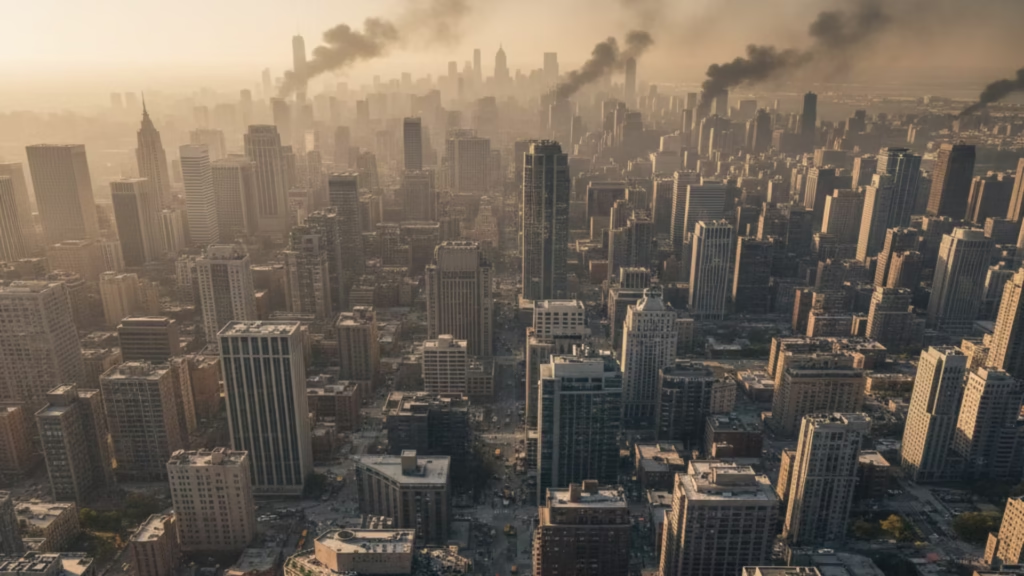
More people now live in cities than anywhere else
In 2007, humanity crossed a historic line: for the first time, more humans lived in urban areas than rural ones. Today, over 56% of the world’s population lives in cities—and by 2050, that number will reach nearly 70%.
Cities are now:
- political centers
- economic centers
- cultural centers
- transportation hubs
- digital infrastructure hubs
That makes them strategic targets and defensive strongholds.
Modern conflict is no longer army vs army
Instead, it’s often:
- state vs insurgent groups
- military vs criminal factions
- government vs paramilitary militias
- rival political groups
- proxy forces backed by foreign nations
These groups hide among civilians, blending into everyday life. And nothing provides cover like a dense, complex, sprawling modern city.
Cities are multidimensional battlefields
A rural battlefield is 2D.
A city battlefield is 3D, even 4D.
Enemies can attack from:
- ground level
- rooftops
- multi-story buildings
- tunnels
- sewers
- subway networks
- abandoned factories
- high-rise apartments
A city is a maze of hiding places, choke points, sniper nests, and ambush zones.
This makes urban warfare unavoidable—and far more lethal.
The Brutal Reality: Why Urban Combat Is the Most Difficult Type of War
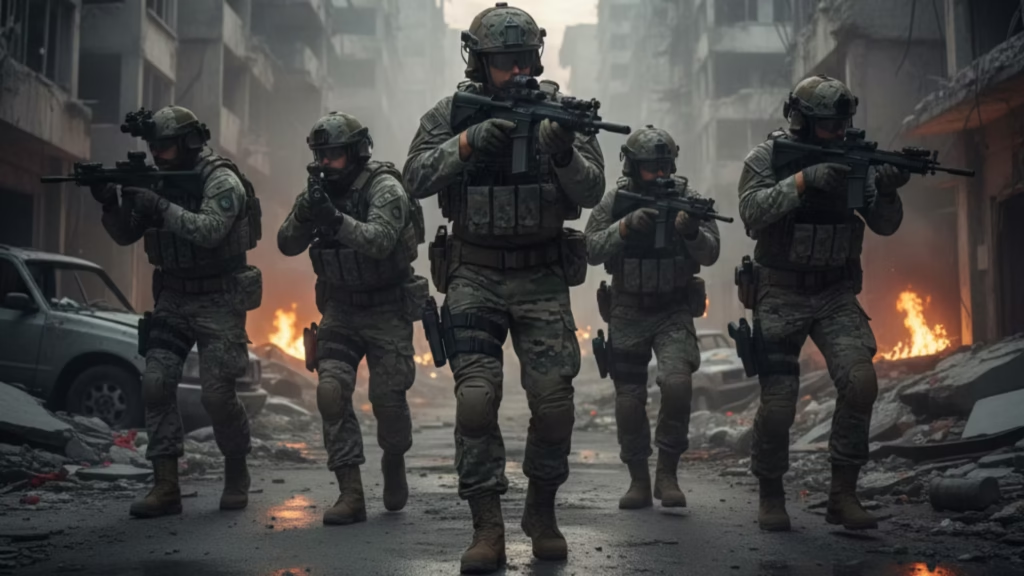
Every corner is a trap
Armies fear urban fighting because:
- visibility is low
- mobility is limited
- GPS and radios fail
- drones struggle indoors
- snipers dominate high ground
- booby traps are everywhere
Cities neutralize many advantages that strong militaries rely on.
Civilians complicate everything
Urban warfare requires incredible restraint.
Fighters hide among civilians.
Civilians often cannot evacuate.
Hospitals, schools, and homes turn into combat zones.
More than any other environment, cities magnify human cost.
Buildings become fortresses
A single building can take days or weeks to clear.
Every room must be searched.
Every window is a possible shooter.
Every floor is another fight waiting.
Urban combat destroys morale
It is physically exhausting, mentally draining, and psychologically traumatic.
Close-quarters engagements often happen within meters, not kilometers.
A soldier described Mosul like this:
“Every building was its own war.”
The New Warfare Laboratories: Cities Where Modern Tactics Were Born
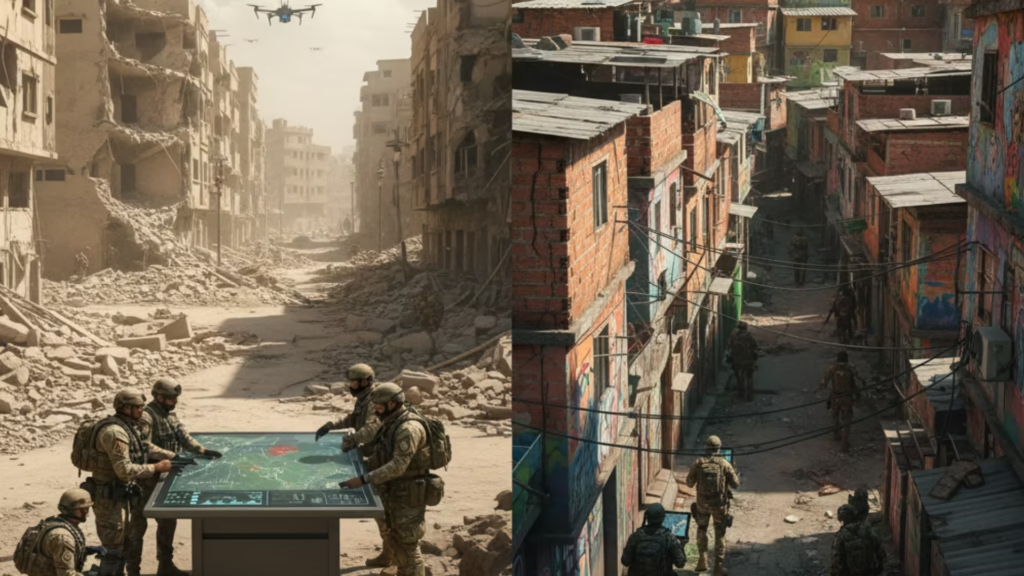
Several cities in the last 25 years became global case studies for urban warfare.
Mosul (Iraq, 2016–2017)
The battle against ISIS in Mosul is considered one of the largest urban battles since World War II.
ISIS utilized:
- tunnels
- drones carrying grenades
- VBIEDs (suicide car bombs)
- booby-trapped houses
- civilian shields
Coalition forces had to reinvent urban strategy in real time.
Gaza
Dense population, urban tunnels (some extending for miles), and guerrilla tactics created a battlefield unlike any other.
Armies studying Gaza today are analyzing:
- subterranean warfare
- mixed urban-rural combat
- drone countermeasures
- civilian protection protocols
Rio de Janeiro (Brazil)
Rio’s unique landscape of vertical favelas, criminal factions, and narrow alleyways forced BOPE and other units to develop tactics not found anywhere else on Earth.
Favela combat involves:
- rooftop-to-rooftop movement
- complex terrain readjustments
- CQB (close-quarters battle)
- decisive force tactics
- armored vehicle innovations (like the Caveirão)
Rio became an urban-warfare laboratory for police and special forces worldwide.
Kyiv (Ukraine, 2022)
The early days of the Russian invasion revealed:
- urban ambushes
- distributed defense cells
- portable anti-tank systems (Javelins, NLAWs)
- drone-guided artillery
- cyber warfare integrated with physical warfare
Kyiv proved that modern urban war now involves digital combat as much as physical.
Why Traditional Armies Struggle in Cities
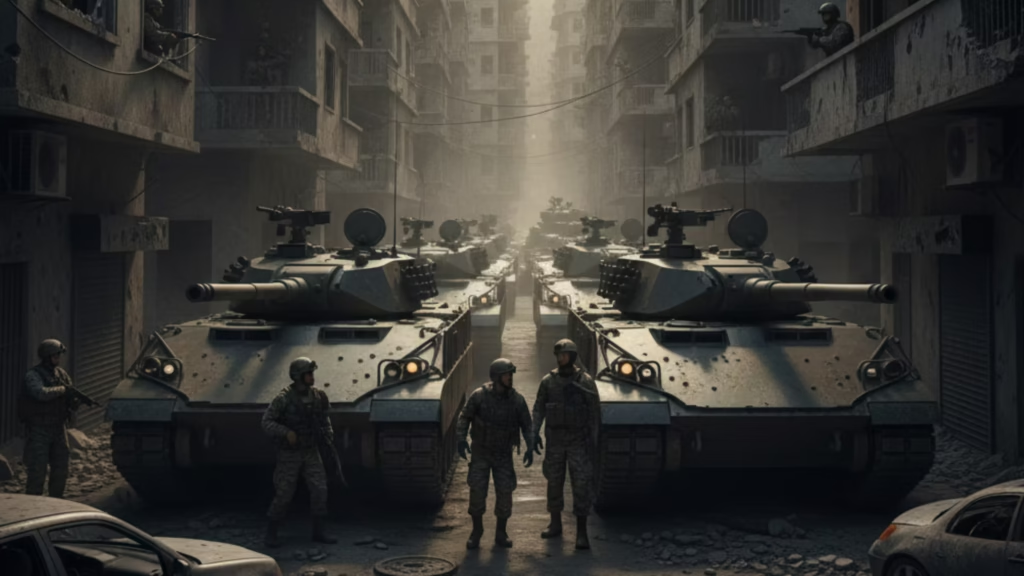
Heavy armor becomes almost useless
Tanks cannot maneuver through narrow streets.
APCs become targets for rooftop attacks.
Air support risks hitting civilians.
Technology becomes unreliable
- GPS jamming
- radio interference
- drone blind spots
- thermal imaging distorted by buildings
The city becomes a “technology killer.”
Speed is impossible
Urban combat is slow, methodical, surgical.
A force that moves too quickly is ambushed.
A force that moves too slowly is encircled.
Costs skyrocket
Urban warfare is the most expensive conflict environment due to:
- equipment loss
- reconstruction
- civilian aid
- prolonged engagements
- collateral damage
No country wants it.
Almost all are forced into it.
How Cities Are Changing Warfare Forever
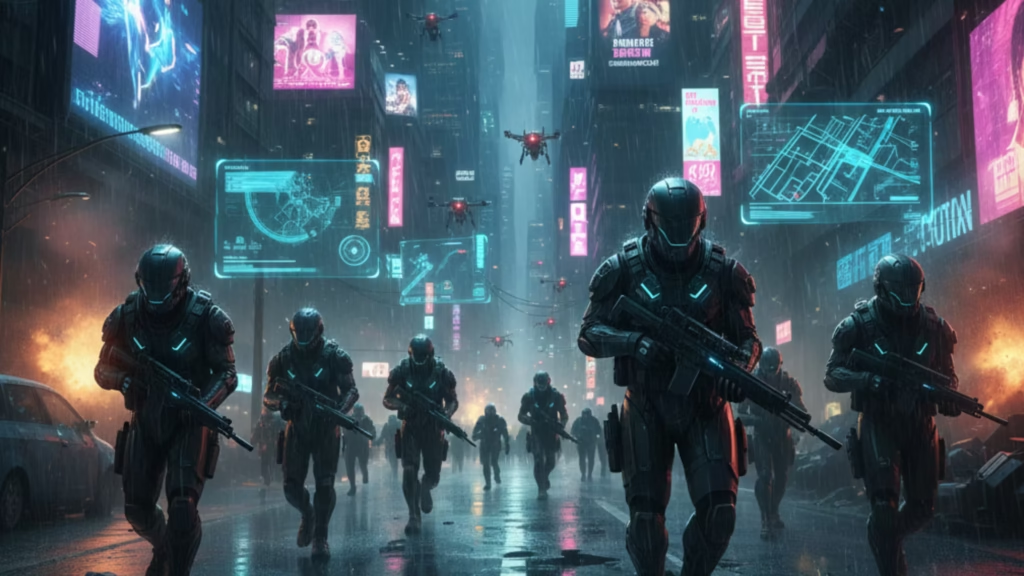
Hybrid Warfare
Modern battles now combine:
- cyber attacks
- drone warfare
- misinformation
- sabotage
- sniper operations
- special-forces raids
- psychological warfare
All happening inside the same urban landscape.
Rise of Tunnel Warfare
Cities now fight above and below ground.
Tunnels complicate:
- intelligence
- mapping
- thermal detection
- troop movement
Drone Domination
Urban battlefields are becoming drone-first.
Small drones can:
- scout buildings
- drop explosives
- relay enemy positions
- jam communications
Armies without drones are already obsolete.
AI and Real-Time Surveillance
Urban warfare is shifting toward:
- real-time battlefield mapping
- AI threat detection
- automated evacuation planning
- predictive movement analytics
Cities are becoming digital battlefields, not just physical ones.
The Moral and Ethical Dilemma of Future Wars
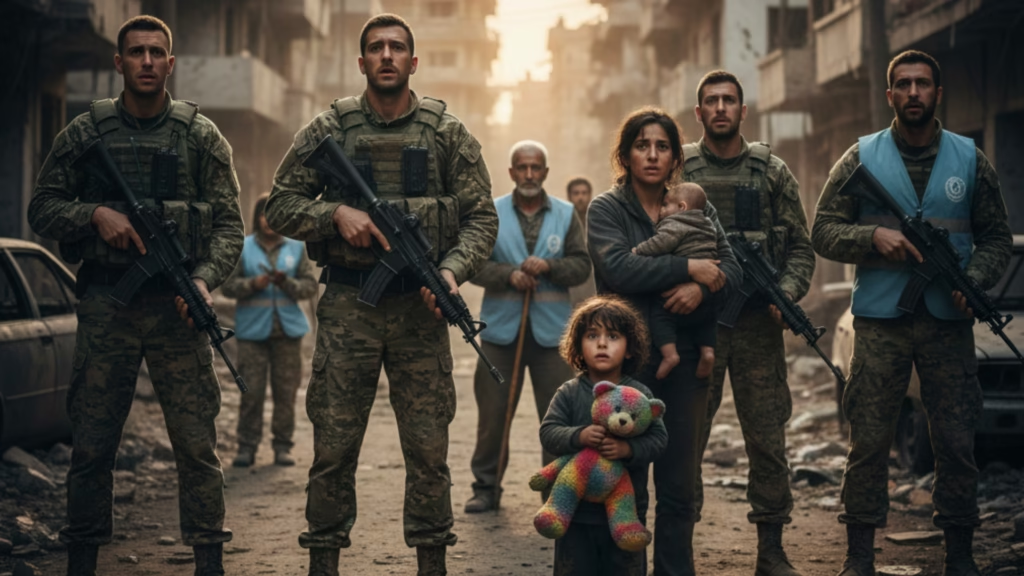
Urban warfare raises questions that no general can answer cleanly:
- How do you fight terrorists hiding behind civilians?
- How do you defend a city without destroying it?
- How do you protect human rights inside a warzone?
- Who is responsible when civilians cannot escape?
Precision strikes are promised.
Error-free warfare does not exist.
Urban conflict will always be morally complicated.
The Future: What Urban Warfare Will Look Like in 2050
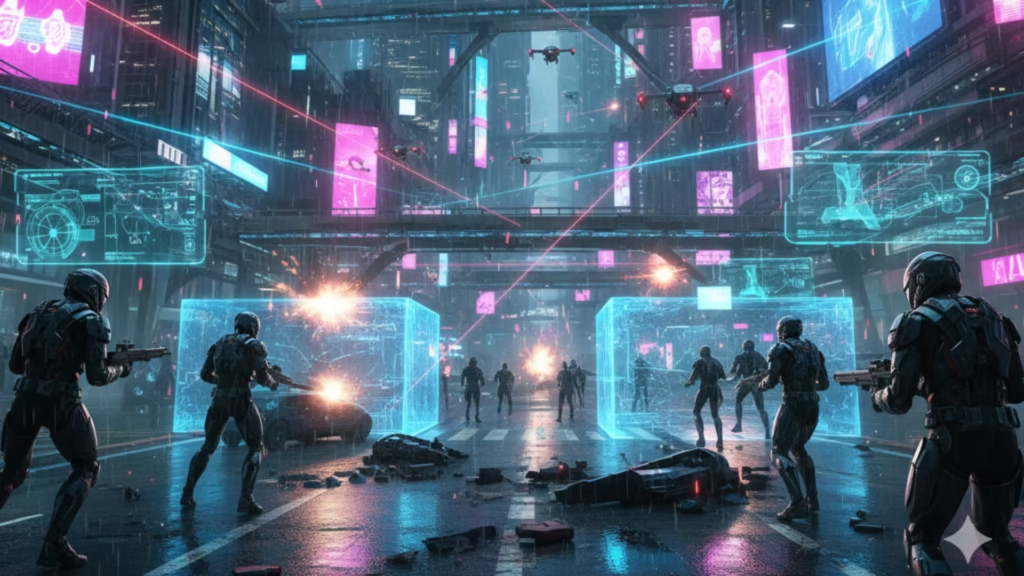
Experts predict:
Robots clearing buildings
Quadruped robots entering before humans.
AI-guided exoskeletons
Soldiers with strength-amplifying suits.
Microdrone swarms
Entire swarms entering buildings through windows.
Augmented reality helmets
Real-time enemy positioning through walls.
Smart cities becoming battlegrounds
Hacked traffic lights, hacked elevators, hacked utilities.
Urban warfare is moving toward a terrifying idea:
War where every object is a weapon and every structure is a battlefield.
The Urban Century Has Arrived
Cities are no longer just places where people live—they are the new front lines of global conflict.
Urban warfare is shaping:
- military doctrine
- geopolitical strategies
- counter-terrorism
- policing
- humanitarian law
- and future technologies
It is the most complex, lethal, and ethically challenging form of warfare humanity has ever faced.
As the world grows more urbanized, the importance of understanding this form of conflict only grows.
Because whether in Rio, Mosul, Kyiv, or future space colonies—urban warfare is here to stay.
You would also love to learn about one of the most feared military forces in the world.
Sources: ICRC | Modern War Institute