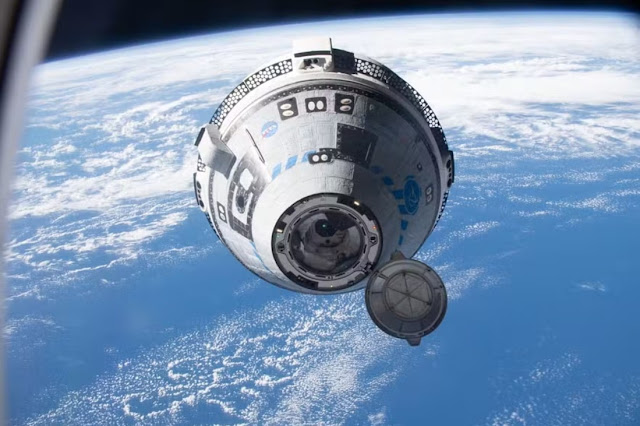
For several years, humans have dreamed of living in space. And thanks to the launch of the International Space Station (ISS), people began to understand it. The most amazing thing is that this idea was nothing but pure science fiction decades ago. However, as much as it is super interesting to leave Earth, people want to return to our planet. However, these astronauts are stuck on the ISS.
Although Boeing’s Starliner spacecraft docked at the ISS earlier this month with NASA astronauts Butch Wilmore and Suni Williams, their journey was not as easy as it may seem. In fact, it was marked by several problems, such as five helium leaks in the propulsion system. This caused NASA to extend the mission twice.
Astronauts stuck on the ISS
These astronauts took off on June fifth from Florida and were scheduled to return to Earth on June 26. However, their return was delayed once again, as announced by NASA.
According to the agency, the capsule can stay on the ISS for another 45 days or more if necessary. Meanwhile, the astronauts will continue to be “stuck” there.
Starliner delayO Globo
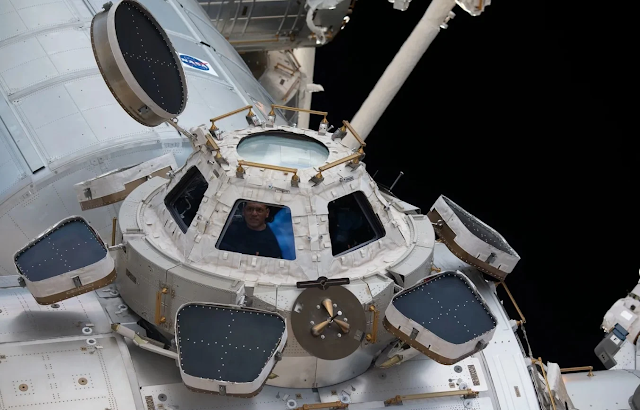
As mentioned, the Starliner took off on June fifth from Florida on an Atlas V rocket from the United Launch Alliance, after several delays, safety issues, and two launch attempts that were aborted with the astronauts already prepared.
At the time of docking, five of the capsule’s 28 thrusters failed as it approached the ISS. After that, all but one thruster were restarted and functioned in a firing test. And the faulty thruster was shut down, as Boeing stated it is not vital for the astronauts’ return trip.
Another issue seen in the Starliner was minor helium leaks, which is the inert gas used to pressurize the thrusters pumps. However, NASA and Boeing said there is a large supply of this gas and the leaks are stable and not a cause for concern.
“So far, we see no scenario where Starliner won’t be able to bring Butch and Suni back home,” said Stich last week.
Following this new delay, NASA and Boeing said they are analyzing possible dates for the astronauts stuck on the ISS to return to Earth. According to Boeing, the spacecraft will stay at the station for 45 days or more.
Being in space
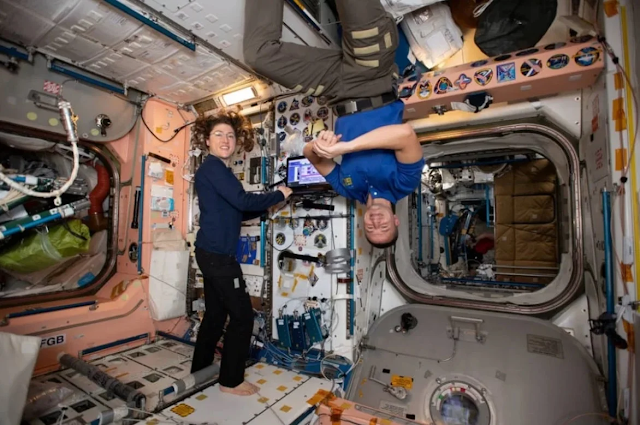
In the case of these astronauts, they are “stuck” on the ISS, they will be there for a longer period than planned and this has its consequences on both the external and internal body. Because, microgravity significantly affects their immune system.
A study is trying to understand why the human body “weakens” once it enters a microgravity environment. In fact, astronauts’ health has been a major concern in the planning of very long space trips.
The study was conducted by the Karolinska Institute in Sweden, showing that the effect of microgravity on astronauts’ immune system can be quite significant. This was seen through simulations with eight people in a dry immersion environment for 21 days.
This immersion was done in a special facility that, despite not using water, partially or completely immersed the participants in a structure with small particles, like grains of sand. Thus, the participants could experience a sense of weightlessness and simulate the physiological changes that occur with astronauts in space.
“In order for astronauts to safely carry out space missions, we need to understand how their immune systems are affected in order to try to find ways to counteract the harmful changes,” said Lisa Westerberg, study leader and principal investigator at the Department of Microbiology, Tumor, and Cellular Biology at the Karolinska Institute.
After the experiment, the researchers analyzed blood samples from the participants before and after the experiment. They observed changes in genetic data related to T cells, also known as T lymphocytes. They are responsible for immune functions.
After being immersed in dry conditions for two weeks, the changes were more significant as they began to have “less mature” cells. According to the study, these cells decrease the risk of various problems, such as infected and cancerous cells. So when their activity is diminished, people may be at a higher risk of autoimmune diseases, infections, and other health problems.
Therefore, researchers believe that their study will positively influence the safety and health of astronauts on future space missions. “The next steps in deep space exploration are crewed missions to the Moon and Mars. For safe space missions for crew members, it is important to understand the impact of space flight on the immune system. These data suggest that T cells adapt by rewiring their transcriptomes in response to simulated weightlessness and that remodeling signals persist when re-exposed to normal gravity,” the study pointed out.
Font: Tecmundo