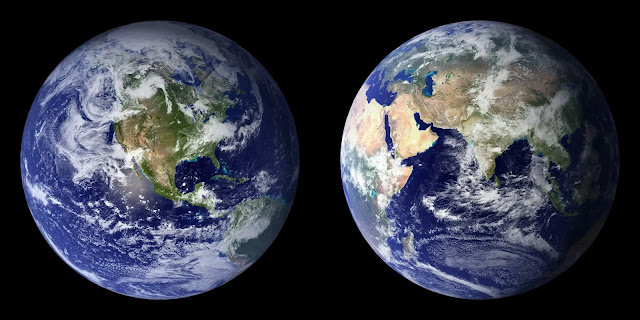
Have you ever felt like time is slipping away a little faster than usual? Like your days are just flying by? Well, maybe you’re not imagining things. Scientists have confirmed something both fascinating and slightly unsettling: Earth is spinning faster than it used to.
No, this isn’t some sci-fi plot or a doomsday prophecy. It’s real. On July 9, 2025, Earth had one of its shortest days ever—completing its full rotation a tiny bit faster than the usual 24 hours. Just a few milliseconds shorter, sure… but in cosmic terms? That’s a big deal.
And it doesn’t stop there. Experts say two more super-short days are coming soon—July 22 and August 5. So yeah, this isn’t a one-off thing. Something’s going on.
But Wait… Why Is Earth Speeding Up?
Turns out, our planet doesn’t spin like a perfect machine. It wobbles. It shifts. And sometimes, for reasons we’re still trying to fully understand, it picks up the pace.
One of the main suspects behind this sudden speed boost? The Moon.
When the Moon reaches certain angles in its orbit—especially when it’s tilted far from Earth’s equator—it messes with our planet’s rotation just enough to make things… weird. It’s a little like when an ice skater pulls in their arms to spin faster. That’s Earth right now—pulling tight and twirling quicker.
But the Moon isn’t acting alone. Earth’s core, the molten iron moving deep beneath our feet, may also be playing a part. Some scientists believe shifts in the planet’s core could be changing the way Earth spins. That’s wild, right?
There’s also the atmosphere to think about—jet streams, ocean currents, and even climate changes can affect how fast or slow we rotate. Nature has a lot of moving parts, and they all influence each other in ways we’re still uncovering.
Does This Mean Anything for Us?

Look, we’re not going to suddenly be living 23-hour days. The difference is less than two milliseconds—you literally won’t feel it. But there’s one area where this actually matters: technology.
Systems like GPS, satellites, atomic clocks, and financial networks rely on precise timekeeping. If the Earth speeds up too much, we may need to do something that’s never been done before: subtract a second from world time. They call it a “negative leap second”, and it’s not something anyone’s excited about. One tiny change like that can mess with servers, data logs, and even financial markets.
So yeah, it’s a small thing that could have huge ripple effects in our high-tech world.
Is This Just a One-Time Thing?
That’s the million-dollar question.
Earth’s rotation has always changed, even if we didn’t notice. A few billion years ago, a day was only 19 hours long. Over time, the Moon’s pull has been slowing us down. But lately? We’re seeing the opposite. Days are getting shorter again, and nobody knows for sure why.
Some scientists are excited. Others are scratching their heads. The truth is—we’re watching something in real-time that might change how we understand Earth’s behavior.
We live on a planet that never stops moving. But what happens when it starts moving faster than expected?
These are the kinds of mysteries that remind us how much we still don’t know. That even something as routine as the turning of the Earth can surprise us. And maybe, just maybe, that’s part of what makes this world so fascinating.
What Do You Think?
Does this kind of cosmic mystery give you chills? Or are you more curious than concerned?
If this blew your mind even a little, share it with someone who loves space, science, or just weird facts. You never know who might be fascinated by the idea that Earth is literally speeding up beneath our feet.
👉 Also, don’t miss our latest article:
“Jesus is real” – The Heartbreaking Final Message of a 7-Year-Old Boy
An emotional and powerful story that’s touched thousands.
Stay curious,
Unknown Facts and Mysteries