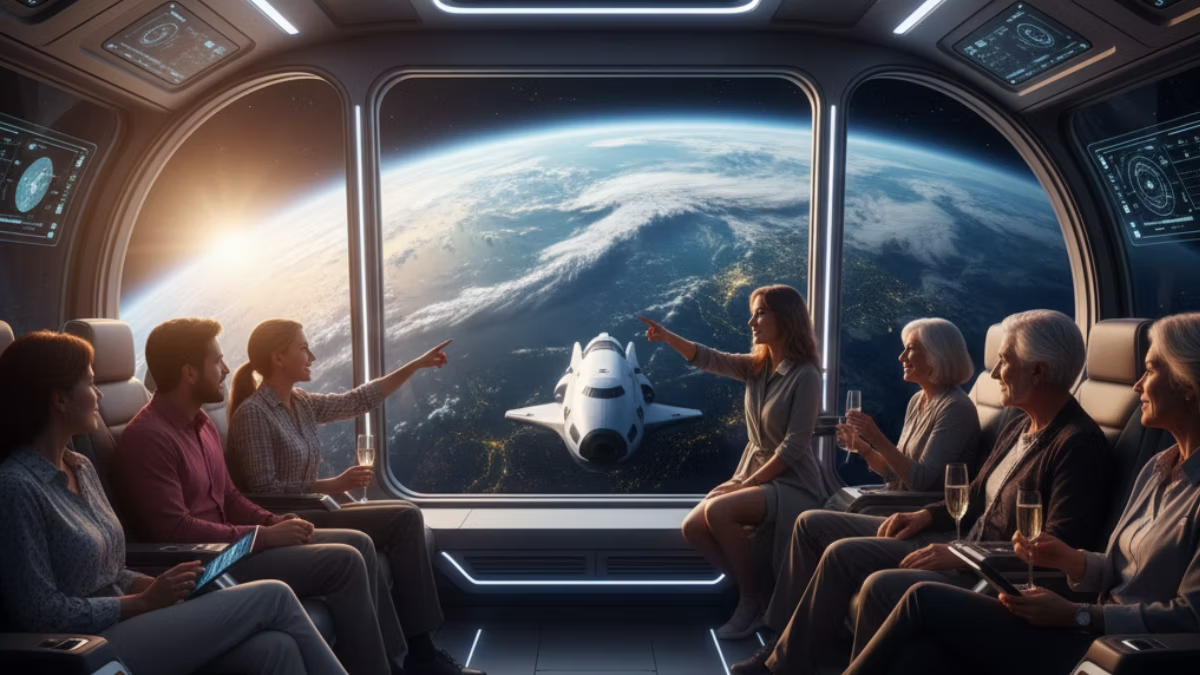
Humanity’s Oldest Dream Is Finally Becoming Real
For thousands of years, humans have stared at the night sky wondering what lies beyond the shimmering void. Ancient civilisations worshipped the stars, philosophers tried to understand them, and scientists devoted their lives to reaching them. But now — for the first time in human history — the question has shifted from “Can we go to space?” to “When can I go to space?”
What once belonged exclusively to governments and highly trained astronauts is rapidly becoming the world’s newest luxury experience: space tourism.
This transformation began in the early 2000s, when the first private individuals paid tens of millions to visit the International Space Station. But the real explosion began after 2021, when companies like SpaceX, Blue Origin and Virgin Galactic achieved safe, repeatable commercial flights. Today, the industry is evolving so quickly that by the 2030s, space travel may be as normal as long-distance international flights.
This article is your ultimate guide, answering everything people search for on Google — from costs to safety, from space hotels to medical requirements, from environmental impact to the future of living in orbit.
Let’s begin.
What Exactly Is Space Tourism? (And Why It Matters Now)
Space tourism refers to any recreational or non-military travel beyond Earth’s atmosphere. In short, it means going to space not to work — but simply to experience it.
But why is it exploding now?
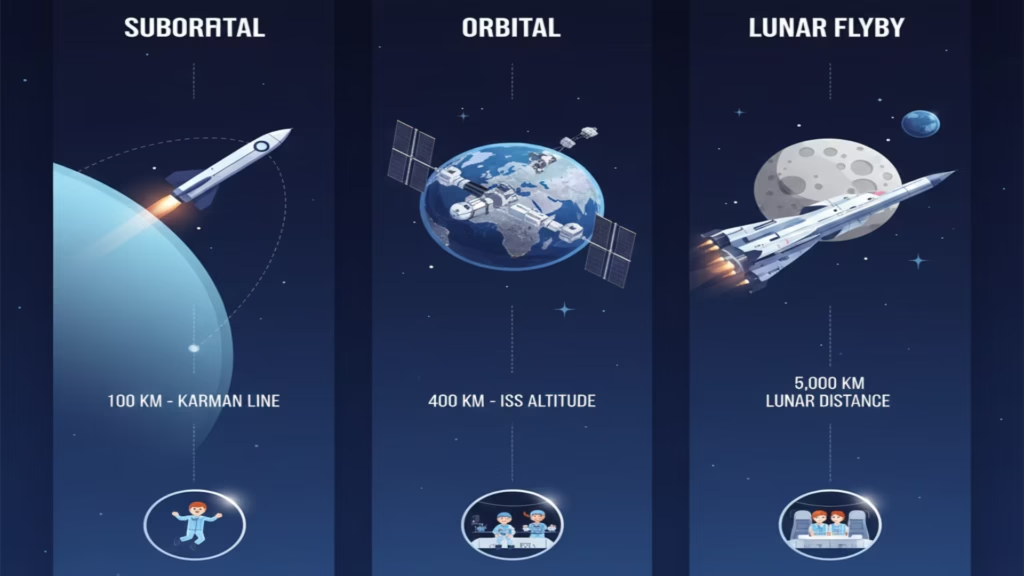
The Three Official Types of Space Tourism
1. Suborbital Tourism
Short, powerful flights that reach the edge of space (~100 km).
You experience:
- microgravity for ~3–5 minutes
- Earth’s curvature
- complete silence
- a high-speed descent
2. Orbital Tourism
This is the “real astronaut” experience.
You orbit Earth at ~28,000 km/h for days or weeks.
This includes:
- staying aboard the ISS or private stations
- full microgravity
- sunrise every 90 minutes
3. Lunar / Deep-Space Tourism (Coming Soon)
Not available to the public yet, but already booked.
SpaceX’s dearMoon mission is the world’s first commercial lunar flyby.
Why Space Tourism Matters Now
Space tourism marks the beginning of a new era:
humanity is becoming a multi-planetary civilisation.
- Private companies now innovate faster than governments.
- Reusable rockets drastically reduce costs.
- Spaceports are being built worldwide.
- The ultra-rich are funding early development — making it affordable later.
We are witnessing the birth of an entirely new industry.
How Much Does Space Tourism Cost in 2025? (Full Breakdown)
Let’s answer the biggest question: “How much does it cost to go to space?”
Suborbital Flight Prices (2025)
| Company | Price | Duration | Altitude |
|---|---|---|---|
| Blue Origin | $250,000 | 10–12 minutes | 100 km |
| Virgin Galactic | $450,000 | 1.5–2 hours | 85–90 km |
Orbital Tourism Prices
| Company | Experience | Price |
|---|---|---|
| SpaceX (Crew Dragon) | 3–5 days in orbit | $55 million |
| Axiom Space | 10 days on the ISS | $55–60 million |
Lunar Tourism (Coming Soon)
| Mission | Price |
|---|---|
| SpaceX dearMoon | Estimated $150–200 million |
Will Prices Drop?
Yes — dramatically.
SpaceX predicts that orbital flights will fall to $5–10 million by the late 2030s due to fully reusable rockets like Starship.
Suborbital flights may drop to $30,000–50,000.
How Safe Is Space Tourism Really? (The Honest Answer)
Is space tourism safe?
The honest answer: It’s safer than people think, but still riskier than anything on Earth.
Accident History
- Blue Origin: 0 fatalities
- Virgin Galactic: 1 fatal test accident in 2014
- SpaceX: 0 crew fatalities
For comparison:
- Driving a car = FAR riskier
- Climbing Mount Everest = 100x more dangerous
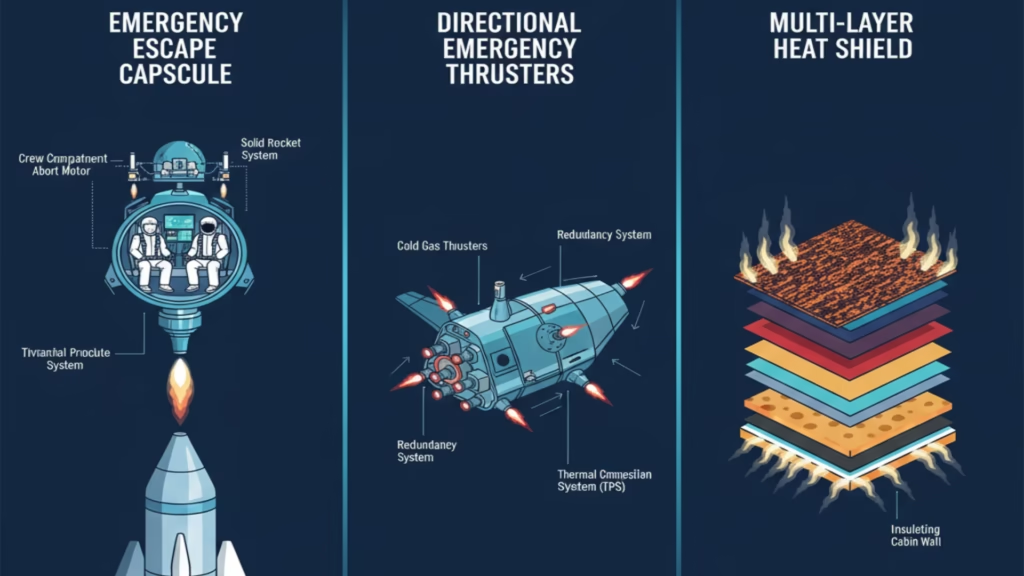
Why It’s Relatively Safe
- rigorous pre-flight testing
- capsule escape systems
- multiple redundant safety layers
- fully monitored flights via AI and ground control
Why It’s Still Dangerous
- re-entry heat shield failure risks
- rocket engine malfunction
- high-G forces
- space radiation (orbital only)
Space tourism is safer than people imagine, but it can never be “zero risk.”
What Does a Space Tourist Actually Do Up There?
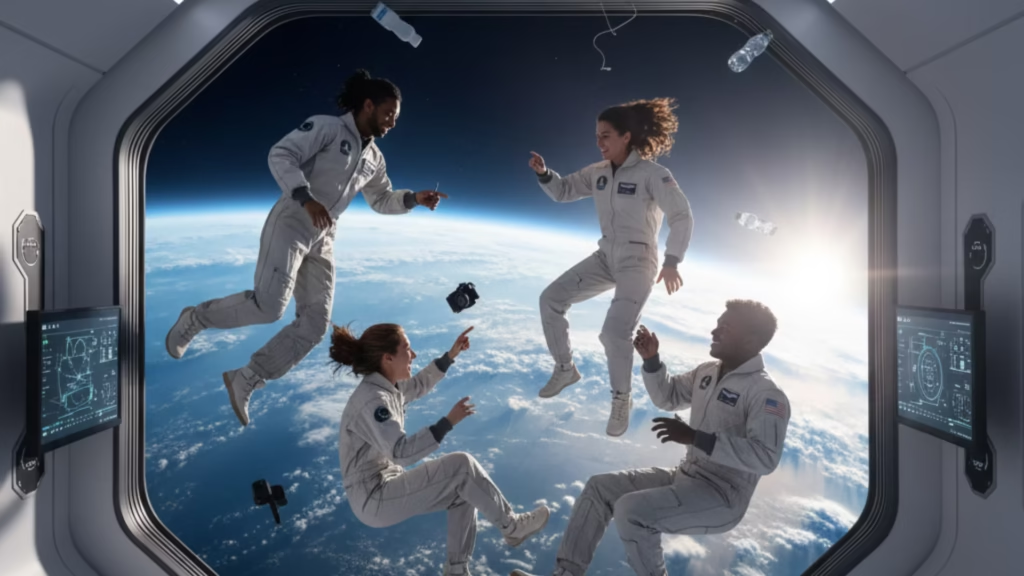
If you spend hundreds of thousands of dollars, what happens?
The Full Itinerary of a Suborbital Flight
- Preflight training (1–2 days)
- Boarding the capsule
- Vertical launch with violent acceleration
- Engine cutoff — silence
- Floating in microgravity
- Viewing Earth from above the atmosphere
- Descent and parachute landing
The entire journey lasts about 10 minutes in space, but the experience is unforgettable.
Orbital Tourists Experience Much More
- eating freeze-dried astronaut meals
- sleeping in microgravity
- conducting simple science experiments
- taking stunning photos
- watching Earth rotate below you
Imagine sunrise every 90 minutes — that’s 16 sunsets per day.
Can Anyone Become a Space Tourist? (Medical Requirements Explained)
Space tourism is more accessible than people think.
Health Requirements
- stable blood pressure
- ability to handle 3–4 Gs
- no major heart conditions
- psychological stability
Surprisingly, people aged 18–90 have already flown.
Training Includes
- emergency drills
- seat positioning
- microgravity preparation
- communication basics
You don’t need to be an athlete — just reasonably healthy.
Space Hotels: Are We Really Going to Sleep in Orbit?
Yes — and sooner than you think.
The First Space Hotels Are in Development
Orbital Assembly Corporation is planning:
- Voyager Station (2028–2032)
A rotating space hotel with artificial gravity. - Pioneer Station
Smaller, modular orbital habitats.
Artificial Gravity: How It Might Work
By rotating the station, centrifugal force simulates gravity.
Guests will be able to:
- sleep normally
- walk without floating
- eat full meals
- take a shower (a real one)
Could Normal People Really Live in Orbit?
Yes — but:
- radiation remains a challenge
- long-term health effects are still unknown
- muscle and bone loss require countermeasures
Space hotels will serve short stays at first — luxury trips for the ultra-rich.
Will Space Tourism Harm the Environment? (What Science Says)
A controversial but important question.
CO2 Emissions
Rockets emit far more CO2 than airplanes per passenger, but far less per year because flights are rare.
Ozone Layer Impact
Rocket soot can damage the ozone layer — especially from solid fuel boosters.
Companies are now shifting to cleaner fuels like:
- methane
- hydrogen
Future Clean Propulsion
The next generation of rockets may use:
- reusable methane engines
- orbital refueling
- electric propulsion for in-space movement
The industry knows the risks and is actively adapting.
What Types of Space Tourism Exist Today?
1. Suborbital (Blue Origin, Virgin Galactic)
Short but spectacular.
2. Orbital (SpaceX Crew Dragon)
Real astronaut experience.
3. Lunar Flyby (Coming Soon)
Private citizens circling the Moon.
4. Mars Tourism (Far Future)
Possible near 2040–2050 depending on SpaceX success.
What Will Space Tourism Look Like by 2035?
Get ready — the future is wild.
Falling Prices
Suborbital: $20,000–30,000
Orbital: $1–3 million
Moon flyby: $10–20 million
Private Space Stations Everywhere
NASA is retiring the ISS — private companies will replace it.
A New Space Economy
- orbital construction
- zero-gravity manufacturing
- asteroid mining
- tourism packages
- lunar honeymoon trips (yes, really)
Will Space Tourism Become as Common as Air Travel?
Experts say: Yes — but not until after 2050.
Why?
Reasons FOR
- reusable rockets
- more spaceports
- cheaper fuel
- mass production of spacecraft
- higher public interest
Reasons AGAINST
- radiation risk
- high liability insurance
- slow regulatory approval
- environmental concerns
Most Realistic Scenario
By 2050–2060, space tourism could be:
- as common as cruises
- affordable for middle-class families
- accessible in hundreds of spaceports around the world
Humanity is slowly becoming a spacefaring species.
Space Tourism Is the Beginning of Something Much Bigger
We are witnessing the opening chapter of humanity’s escape from Earth.
Space tourism is not just a luxury — it is a catalyst:
- for scientific progress
- for technological innovation
- for planetary expansion
- for the dream of living among the stars
And you, reading this now, might be among the first generations to witness:
- orbital hotels
- lunar vacations
- commercial Mars travel
- the first baby born in space
- Earth’s first space city
Humanity is evolving — and the final frontier is finally within reach.
Read Also: Chernobyl Fungis are eating Radiation
FAQ – Space Tourism
What is space tourism in simple terms?
Space tourism is the activity of traveling to space for leisure instead of scientific or military purposes. It allows private civilians to experience microgravity and view Earth from space.
How much does it cost to go to space as a tourist?
In 2025, prices range from $250,000 for suborbital flights (Blue Origin) to over $55 million for orbital missions with SpaceX. Future prices are expected to drop significantly.
Is space tourism safe for normal people?
Yes, space tourism is considered relatively safe thanks to advanced engineering, redundant systems, and strict medical screening. However, it still carries higher risks than air travel.
How long does a space tourism flight last?
- Suborbital flights: 10 to 15 minutes
- Orbital missions: 3 to 10 days
- Future lunar flybys: Up to 1 week
Do you need to be an astronaut to go to space?
No. Space tourists are not required to have astronaut training. They only go through short preparation programs and basic emergency procedures.
Can normal people live in space hotels in the future?
Yes. Space hotels with artificial gravity are currently under development and may open as early as 2030–2035. These stations will allow regular tourists to sleep and move normally.
Does space tourism damage the environment?
Rocket launches do produce emissions and can impact the ozone layer. However, space companies are rapidly shifting to reusable methane and hydrogen-based propulsion systems, which are far cleaner.
When will space tourism become affordable for the middle class?
Experts estimate that between 2040 and 2050, space tourism could become financially accessible to upper-middle-class families due to mass production and full rocket reusability.
Which companies currently offer space tourism?
The main companies are:
- Blue Origin
- Virgin Galactic
- SpaceX
- Axiom Space
Is space tourism just for the ultra-rich?
For now, yes. But just like air travel in the early 1900s, prices are expected to fall dramatically as technology matures.
Well written and i am happy that you mention overall everything a person wants to know aboit space tourism .thank you
It is my pleasure to bring up a topic we hardly find articles about.
Thank you for your support ❤️😘