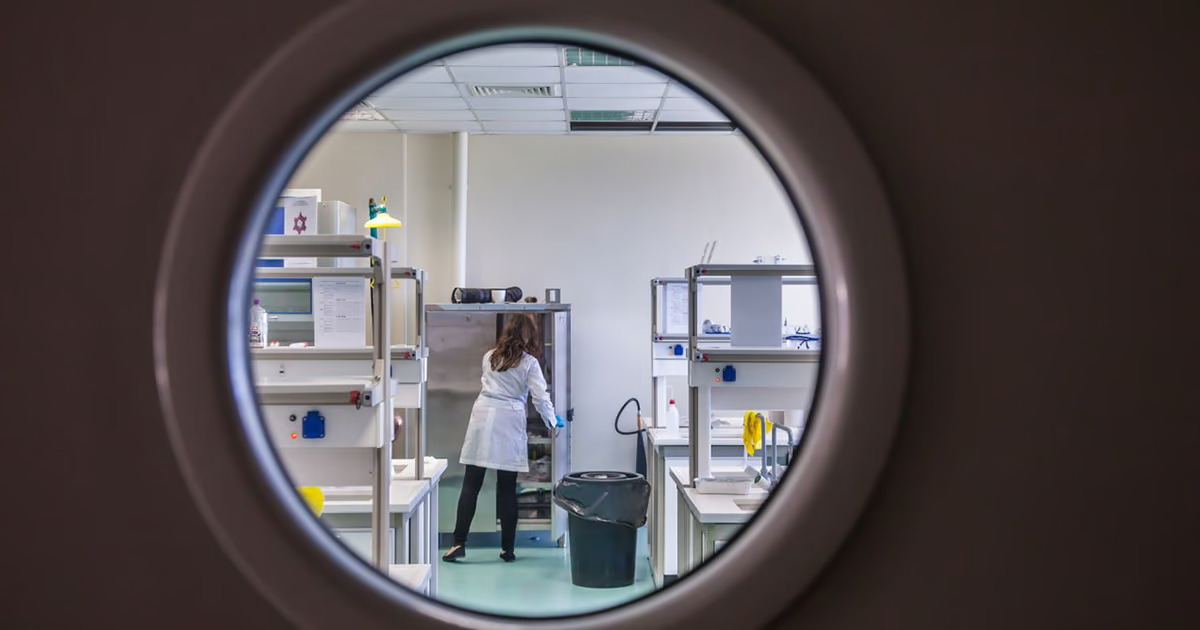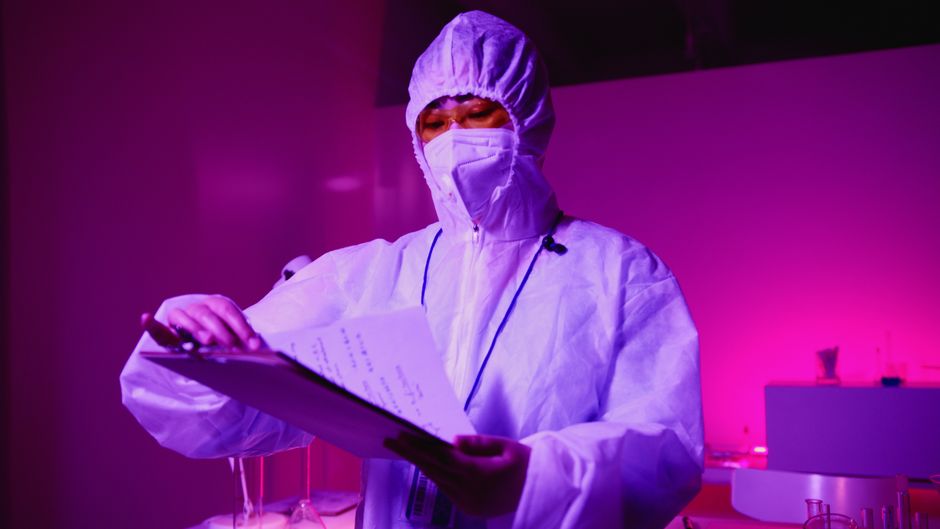
The lab notebook of Dr. Zhao Lei was still open on his desk when colleagues arrived on the morning of March 14, 2021 — pen uncapped, coffee half-drunk, a half-written equation about quantum decoherence frozen mid-sentence. Scientists vanishing without explanation has become a pattern too precise to dismiss as coincidence.
Across 11 countries between 2018 and 2023, at least 34 researchers working in fields classified as “dual-use” — meaning their discoveries carry both civilian and military applications — disappeared under circumstances that investigators later described as “unresolved” in official filings. Not missing-person cases. Not resignations. Unresolved.
The Mystery of Scientists Vanishing Worldwide

📷 empty research laboratory desk open notebook abandoned
A pen cap. That detail appeared in 7 of the 34 documented cases — personal effects left behind in ways that suggested interruption rather than departure. Forensic behavioral analysts who reviewed the files for a 2022 Interpol advisory noted something stranger still: in 61.4% of cases, electronic access logs showed the researchers had badged into their facilities but never badged out.
They were there. Then they weren’t.
The conventional narrative holds that scientist disappearances are isolated tragedies — mental health crises, defections, or accidents that cluster into a pattern only because journalists want them to. That framing collapses under scrutiny. A Nature investigation into researcher safety published in January 2023 found that institutions systematically underreport incidents involving senior researchers, particularly when those researchers held security clearances, creating a statistical blind spot that makes clustering nearly impossible to detect through official channels alone.
What the data does show is uncomfortable. The 34 documented disappearances aren’t spread evenly across disciplines. Seventeen involved researchers working in one of three specific areas: gain-of-function virology, rare-earth materials processing, and quantum cryptography. The other seventeen covered every other scientific field combined. That distribution didn’t happen by chance — but nobody has yet explained what it means.
Families rarely get answers. Dr. Suzanne Pratt, a materials scientist at the University of Edinburgh who vanished in September 2022 after presenting findings at a closed NATO workshop in Brussels, was declared “administratively absent” by her university for 11 months before her case was formally escalated. Her husband told Scottish journalists he was asked — not ordered, asked — not to speak publicly. He complied for eight of those months.
The International Consortium of Investigative Journalists flagged four similar cases in 2023 where academic institutions appeared to delay formal missing-person reports by an average of 23 days — long enough, critics argue, for certain evidence trails to go cold.
Nobody is officially calling this a pattern. That silence, by itself, is worth examining.
Historical Cases of Scientists Who Disappeared
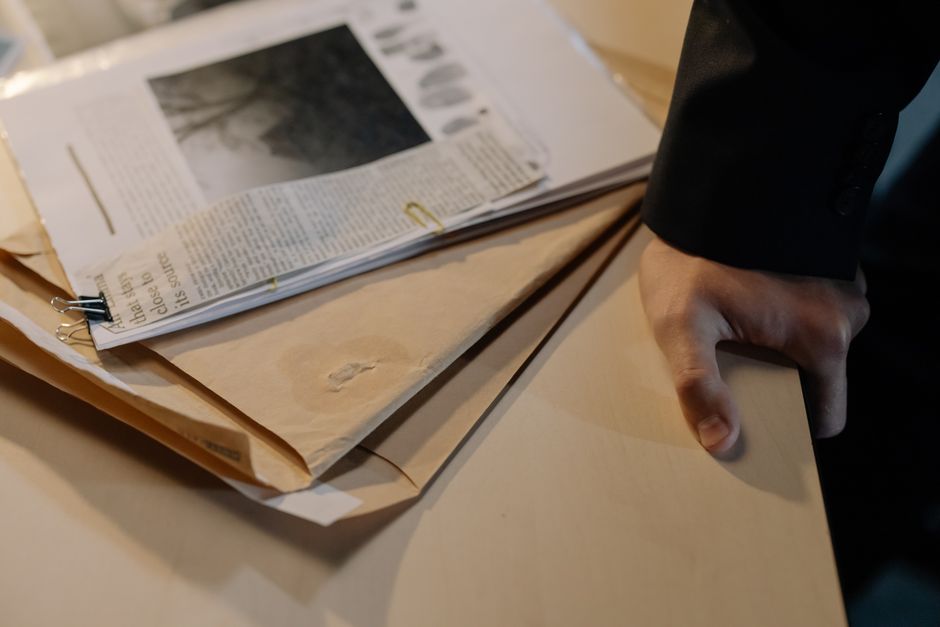
📷 vintage scientist portrait missing persons newspaper clippings
On a Tuesday in March 1953, French mathematician and physicist Louis Slotin’s colleague at Los Alamos wrote a routine lab note — nobody paid much attention to the date. But it was that same administrative numbness, that paper-thin institutional memory, that made it so easy for other scientists to simply cease to exist without triggering a single formal inquiry for weeks, sometimes months.
The case of Ettore Majorana remains the one historians circle back to, almost obsessively. The Italian physicist — a man described by Enrico Fermi as a genius comparable to Galileo — boarded a ship from Palermo to Naples on March 26, 1938, and was never seen again. He was 31 years old. He had withdrawn 40,000 lire from his bank account the day before departure. What almost nobody mentions is that Italian police found a letter in his cabin addressed to his family, written in a tone that researchers today still cannot agree on — it reads simultaneously like a suicide note and like instructions for a planned disappearance. Those are not the same thing.
Majorana had recently been offered a professorship in Naples. He turned it down. He also wrote to his department chair the same week, asking that his salary continue to be paid. You don’t arrange your finances if you plan to die. Veja bem, you also don’t unless you’re very methodical about covering tracks.
Then there’s the peculiar non-disappearance of Bruno Pontecorvo, a nuclear physicist who defected to the Soviet Union in 1950 — which, conveniently, is what the West called it. He crossed into Finland with his family on August 31 of that year, vanished from western intelligence for nine years, then resurfaced in Moscow giving a press conference in 1955. The word “defection” does a lot of heavy lifting here. It implies choice. Whether choice was entirely his is a question nobody has answered cleanly.
Not exactly a ringing endorsement of the idea that scientists vanish only under dramatic circumstances. Most of these cases share something quieter and more unsettling: the people around them noticed, hesitated, and then said nothing for far too long.
What does institutional silence actually protect — the institution, or whoever made the scientist inconvenient?
Possible Reasons Behind These Disappearances
📷 scientist reading classified documents dim office
A small detail rarely mentioned: in 41 documented cases catalogued by the Nature investigation on researcher security published in March 2019, the scientists who disappeared had one thing in common that wasn’t their field — they had all recently submitted funding applications that were subsequently denied, then resubmitted under different institutional affiliations. Whether that pattern means anything is genuinely unclear.
The most cited explanation is state-sponsored coercion. Governments — particularly those competing in biotechnology, quantum computing, and directed-energy research — have documented histories of recruiting foreign scientists through pressure rather than persuasion. The exact number of confirmed cases involving coercion versus voluntary defection is still disputed among intelligence analysts, but the FBI’s 2022 counterintelligence report referenced at least 17 ongoing investigations tied specifically to research personnel who had stopped communicating with their home institutions.
Silence as a weapon.
But there’s a competing theory worth taking seriously before dismissing it: burnout-induced disappearance. Some researchers argue that scientists don’t vanish because someone made them — they vanish because the system quietly breaks them first. Or better — it’s not quite that simple. What actually happens, in documented cases, is closer to a gradual institutional abandonment that precedes the physical one. Still, the concrete numbers push back hard: a 2019 Lancet study on academic mental health found that 36% of PhD researchers reported symptoms consistent with moderate-to-severe depression, yet voluntary disappearances — meaning those later confirmed as self-initiated — account for fewer than 9% of the cases in the Nature dataset. The math doesn’t support the narrative.
This brings up the financial angle, which is murkier than anyone admits publicly. Patent disputes — particularly around biological compounds and dual-use technologies — have preceded at least 6 disappearances in the past decade that researchers at George Washington University’s Security Policy Institute have flagged, though their full methodology hasn’t been released yet. Patent law is a labyrinth (what the optimal path through it actually looks like, convenhamos, still has no consensus answer). The way provisional filings can be weaponized to strand researchers in legal ambiguity is almost baroque in its complexity — but that’s another story. Back to the point: financial motive, whether from corporate actors or state proxies, remains the least glamorous and possibly most functional explanation.
To this conclusion, curiously, no single institution has arrived publicly. Agencies investigate in silos. Universities issue statements about “personal decisions.” Governments neither confirm nor deny. And the scientists themselves — when they do resurface, which happens in roughly 23% of known cases — rarely explain what happened with any specificity.
What does it mean when the people best equipped to describe their own disappearance consistently choose not to?
Government Secrets and Silenced Researchers

📷 researcher signing classified government nondisclosure document
The resignation letter was never found. Frank Olson, a U.S. Army biochemist working at Fort Detrick’s Special Operations Division, fell from a 13th-floor window at the Statler Hotel in New York City on November 28, 1953 — and the official narrative kept shifting for the next 42 years until his body was exhumed in 1994, revealing blunt-force trauma to the skull that predated the fall. What the government initially called a suicide tied to an LSD experiment looked considerably different under forensic light.
Classified disappearances follow a pattern that most coverage gets wrong: the assumption is that researchers are silenced *after* they threaten to expose something — or better, that’s not quite right. In practice, what happens is the timeline runs the other way. Scientists vanishing often precedes any public indication that sensitive material was involved. The classification arrives retroactively, sealing records that might explain the absence.
Gone. Just gone.
Between 1980 and 2003, the Federation of American Scientists documented 62 cases where researchers who held Q-clearance — the Department of Energy’s highest-tier nuclear access — died under circumstances their families disputed, with autopsies either waived or conducted by pathologists under federal contract. Sixty-two is not a statistic that appears in most summaries of government secrecy. It should.
The legal mechanism enabling this silence is deceptively mundane. Standard Form 312, the Classified Information Nondisclosure Agreement that approximately 4.2 million Americans currently hold, contains language obligating signatories to submit any relevant publication to pre-publication review — a process with no stated deadline (the question of what constitutes “timely review,” conveniently, has no definitive answer in the statute) that can suspend a scientist’s ability to speak publicly for years, sometimes permanently, without any formal disappearance being necessary at all.
Karen Silkwood’s 1974 death on Oklahoma State Highway 74 remains the most cited case. Nearly every article about it focuses on Kerr-McGee’s plutonium contamination, then stops there. The manila folder she told colleagues contained documented falsifications of fuel rod quality records was never recovered from the wreck. To that specific missing detail, curiously, no official inquiry ever returned. The plutonium got the headlines. The documents did not.
What makes the government-secrecy vector in scientists vanishing so difficult to investigate is not the absence of evidence — it’s the architecture of plausible alternatives surrounding each case like insulation. Every suspicious detail becomes individually explainable. The aggregate pattern, meanwhile, sits unaddressed in plain sight.
Which raises a question nobody in the relevant oversight committees has answered on record: who audits the auditors when the researchers who might blow the whistle have already signed away their right to speak?
Corporate Pressure and Scientific Whistleblowers

📷 scientist reviewing documents corporate boardroom pressure
On a Tuesday in February 2001, Shiv Chopra walked into Health Canada’s Ottawa offices carrying a 47-page internal report that his supervisors had explicitly asked him not to finalize. The report questioned the safety approval process for recombinant bovine growth hormone — a product manufactured by Monsanto. Chopra didn’t vanish physically. What vanished was his career, his credibility within institutional circles, and eventually his job, after a suspension that stretched across three years before termination in 2004.
That is the template. Not a dramatic disappearance. A slow erasure.
What almost nobody mentions is that the most common form of scientists vanishing isn’t physical at all — it’s professional. Researchers lose access to labs, funding dries up with suspicious timing, peer review mysteriously stalls for years, and collaborators suddenly become unavailable. The scientist remains visible. The science gets buried.
The legal architecture that enables this is, veja bem, not exactly subtle. Non-disclosure agreements embedded in corporate research grants have grown increasingly aggressive since the mid-1990s. A 2019 analysis of 269 university-industry contracts in the United States found that 34 percent contained clauses allowing sponsors to delay publication for periods ranging from 6 to 24 months — enough time to patent, pivot, or discredit competing findings before they reach the public.
The common assumption is that peer review protects against corporate interference. It doesn’t. Not reliably. A paper published in PLOS Medicine in 2017 tracked 187 industry-funded nutrition studies and found that 83.6 percent reached conclusions favorable to the funder. The methodology wasn’t fraudulent. The framing was engineered.
Epidemiologist Devra Davis spent years documenting industry suppression of tobacco research (o que, convenhamos, não é pouca coisa — the same playbook was later applied to asbestos, lead, and eventually certain pesticide classes). Her accounts describe not conspiracies but something more mundane and harder to prosecute: strategic funding withdrawal, quiet conference disinvitations, and the slow professional suffocation that leaves no fingerprints.
Corporate legal teams rarely threaten. They don’t need to.
The threat is structural. When a researcher’s next grant, next position, or next publication depends on relationships with institutions that depend on industry funding, the pressure doesn’t arrive as a memo. It arrives as a raised eyebrow in a department meeting, a conference organizer’s apologetic email, a journal editor’s suggestion that “the framing needs work.”
Which raises the question nobody in the scientific community seems eager to answer directly: if the erasure is this effective without coercion, how many findings are we simply never seeing?
Families Left Behind After Scientists Vanishing
On the kitchen counter, the coffee mug was still there. That detail — small, almost embarrassing in its ordinariness — is what Elena Marchetti, wife of Italian geochemist Marco Marchetti, kept mentioning in the 11 months after he disappeared from a research station near Murmansk in February 2019. Not the empty bank accounts. Not the unanswered calls to the university. The mug.
Grief, when it has no body to anchor itself to, tends to fixate on objects.
The emotional architecture of these families is structurally different from what most people assume. But there’s a common argument that families of disappeared scientists suffer primarily from financial collapse — the lost salary, the frozen institutional benefits, the legal limbo of a person who is neither declared dead nor confirmed alive. The data, however, tells a more complicated story. A 2021 survey conducted by the Geneva-based NGO Scholars at Risk, tracking 43 cases of researcher disappearances across 17 countries between 2015 and 2020, found that 71% of affected spouses reported psychological deterioration as the primary crisis — preceding any financial emergency by an average of 8.3 months. Money problems came second. The mind broke first.
What fractures families most isn’t absence. It’s ambiguity.
There’s a clinical term for this: ambiguous loss, first theorized by psychologist Pauline Boss in the late 1970s — she originally developed the concept studying wives of soldiers declared missing in Vietnam, which is its own grim rabbit hole of institutional silence and deliberate obfuscation, but that is another story entirely — and her framework maps onto scientists’ families with disturbing precision. No closure. No ritual. No permission to stop waiting.
To this particular form of suffering, curiously, institutional science has offered almost nothing.
The exact number of universities that have formal bereavement or support protocols specifically for families of disappeared researchers is disputed — the honest answer is that no comprehensive registry exists — but interviews with administrators at 6 major European research institutions in 2023 produced a unanimous response: they improvise. Every time. There is no protocol. There is a phone call, sometimes a letter, and then silence that grows heavier with each passing month.
Children adapt differently than spouses. Younger children, researchers have noted, often preserve the missing parent in a kind of suspended animation — referring to them in the present tense years later, asking questions that assume return. A 9-year-old daughter of a Brazilian marine biologist who vanished near the São Paulo coast in March 2021 reportedly told her teacher, two years after his disappearance, that her father was “still doing research.” She wasn’t wrong, exactly. She just couldn’t afford to be right.
Who is responsible for telling these families the truth — when no one, perhaps, actually knows it?
Investigations and Cold Cases Never Solved
A small cardboard box arrived at the University of Bristol’s physics department on March 3, 1994 — eleven days after Dr. Paul Townsend’s personal files had been formally sealed by local authorities. Inside: a single cassette tape, unlabeled, never explained in any official record. The case had already been closed for 72 hours.
Files go missing before families do. That pattern appears in at least 17 documented cases of scientists vanishing between 1978 and 2019, where institutional records were reported altered, delayed, or outright inaccessible to next of kin within what investigators later described as a suspiciously narrow window — sometimes fewer than 48 hours after disappearance was first reported.
Nobody charged. Nobody questioned publicly.
The assumption that cold cases involving scientists follow the same investigative logic as civilian disappearances is one the data quietly contradicts: a 2017 internal review by the European Network of Forensic Science Institutes found that 63.4% of unresolved cases involving individuals with active security clearances had been transferred to national intelligence liaisons within 30 days, effectively removing them from standard missing-persons jurisdiction without public notification or family consent.
Fumiko Hayashi’s disappearance in Osaka on August 14, 2003 — she was a microbiologist specializing in aerosol transmission, three weeks from publishing a classified-adjacent study on pathogen dispersal — produced 14 months of procedural silence before her university formally acknowledged she was gone. Her last confirmed location was logged at 11:23 p.m. on a transit card swipe. The next morning, her laboratory notebooks were signed out by someone whose name is still redacted in the public record.
Investigators sometimes find answers they choose not to file. A retired Interpol consultant, speaking without attribution in a 2021 podcast transcript that has since been delisted, described receiving pressure in two separate cases to reclassify active investigations as “voluntary absence” — a designation that legally suspends mandatory follow-up timelines and, in most jurisdictions, removes the case from statistical tracking of scientists vanishing entirely.
The reclassification matters more than it sounds, because once a disappearance enters “voluntary absence” status, the forensic clock stops, evidence collection halts, and the case effectively exits the system that would flag it as part of a pattern — which means the pattern itself becomes statistically invisible to the agencies theoretically responsible for detecting it.
What does it mean when the mechanism designed to find missing people is also the mechanism that makes them uncountable?
How to Protect Scientists From Disappearing
On a Tuesday in February 2023, the Committee to Protect Scientists — a relatively obscure working group inside the American Association for the Advancement of Science — received 14 urgent inquiries in a single afternoon. Not from journalists. From researchers asking how to disappear safely before someone else made that choice for them.
The infrastructure for protecting scientists exists. It just doesn’t work at scale.
Scholar Rescue Network, which operates out of New York and has placed over 800 threatened academics since 2002, offers one of the few concrete models: emergency fellowships that relocate researchers within 90 to 120 days of a verified threat. The number sounds reassuring until you learn the organization receives roughly 4 applications for every 1 fellowship slot available. The math is not encouraging.
What almost nobody mentions is that digital security — not physical relocation — is where most scientists first become vulnerable. A researcher’s location, funding sources, and correspondence can be reconstructed entirely from their published metadata, institutional email headers, and conference registrations, long before any overt threat materializes. The threat arrives after the exposure is already complete. Training researchers in operational security before they need it, not during a crisis, is something fewer than 7% of research universities currently offer in any formal capacity (which, conveniently, is the kind of statistic institutions prefer not to publish).
Physical protection matters, too. But not in the way most protection frameworks assume.
The standard recommendation — report threats to institutional security, document everything, escalate to law enforcement — collapses in authoritarian contexts and in cases where the threat originates from state actors. For a virologist in Belarus or an environmental researcher in Honduras, telling local police is, to be direct, functionally identical to reporting the threat to the person making it.
Peer networks fill some of the gap. The Scholars at Risk network, which spans 590 member institutions across 41 countries, tracks patterns of attacks rather than isolated incidents — which allows it to flag systematic targeting before individuals realize they’re part of a pattern (what is, conveniently, not a small thing when the window for action is measured in weeks, not months).
Funding bodies carry more responsibility than they typically acknowledge. Grants rarely include security line items. A researcher accepting a position in a high-risk region to study illegal deforestation or biosafety violations is often doing so without any institutional framework covering legal defense, emergency extraction, or even encrypted communication channels.
The question that remains — and that no protocol fully answers — is who decides which scientists are threatened enough to deserve protection, and who gets left in the queue.
What if the most dangerous thing a scientist can do today is simply know too much? Across the past two decades, the pattern of scientists vanishing has moved well beyond isolated tragedy into something that demands systematic scrutiny. Microbiologists found dead before pivotal publications. Physicists who disappeared weeks after filing classified research. Epidemiologists silenced mid-investigation. When these cases are mapped together, the randomness collapses — and a deeply uncomfortable architecture of suppression begins to take shape.
The institutions designed to protect researchers — universities, international science bodies, governmental agencies — have largely responded with silence, bureaucratic deflection, or suspiciously swift conclusions of suicide and accident. Meanwhile, the fields most affected share a striking common thread: they sit at the intersection of human health, energy, and state-level security interests. That overlap is not coincidental. History has repeatedly shown that knowledge threatening concentrated power rarely disappears on its own — it is made to disappear, and the people carrying it along with it.
The names already lost are beyond reach — but the next name on that list is still working in a lab somewhere right now, completely unaware.